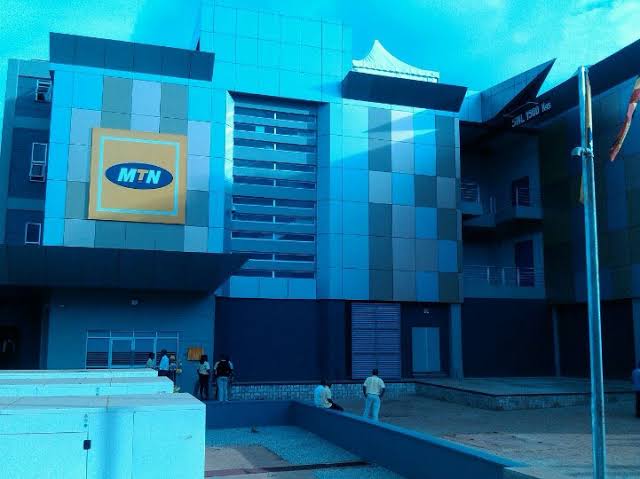
Mutundwe Data Centre
When the power failed at MTN Uganda’s Mutundwe switch and data centre over the weekend, it did not just knock out one part of the network. It took down voice calls, data, mobile money and mobile learning services for customers across the country.
Mutundwe is one of only two parent sites that MTN operates, the other being Mbuya. Commissioned in 2012 at a cost of $256 million, the facility houses the servers and switching equipment that route 2G, 3G and 4G signals to millions of subscribers nationwide.
Four smaller sites, in Mbarara, Masindi, Lira and Tororo among others, depend on Mutundwe and Mbuya to keep voice, data and mobile money services running. In effect, Mutundwe functions as one of the two brains of MTN’s entire Uganda operation.
That dependency is what made the weekend’s outage so disruptive. MTN Uganda chief executive officer Sylvia Mulinge said the disruption started with a power failure at the data centre and then rippled outward.
“This was an unexpected interruption in our service delivery due to a significant power outage that we faced in our data centres, and in this age where everything is connected, sometimes when one thing fires, it ends up affecting everything else,” Mulinge said.
“40% of our base [24.7 million subscribers] were affected, and that is because we have redundancies in our data centers. We don’t have only one data center. However, for mobile money, the impact was much larger. The entire system was off.”
For a facility that supports a network of over 2,550 masts, covering 97% of the population on 2G, 91% on 3G and 61% on LTE, even a few hours of downtime at Mutundwe can be felt almost immediately across the country.
This time, the outage stretched for close to nine hours before services were fully restored, long enough for calls to drop, data sessions to fail, mobile money transactions to stall and school fee payments, bill payments and merchant transactions to go unfulfilled in the middle of the weekend.
“It was only a power outage issue. There was nothing more. It was simply a switch that failed and then triggered something that was unexpected that had not been seen and therefore post a wider ecosystem impact,” Thomas Motiepa, MTN Chief Technology and Information Officer, explained.
What is the financial implication
The outage also exposed how far mobile money has moved beyond being a convenience and into something closer to daily infrastructure.
Still, for the 14.7 million active mobile money users, over 200,000 agents and more than 100,000 merchants who rely on the platform, nine hours offline meant nine hours of failed transactions.
“On mobile money, unfortunately the entire base was affected. So, all customers all agents or merchants the entire service was off and during the entire period when the interaction was there,” MTN Mobile Money managing director Phase Lubega said.
While MTN only loses the specific fee percentages as direct revenue, the total value of money frozen during a 9-hour downtime is huge. In 2025, MTN MoMo processed more than UGX 195.5 trillion in total transaction value.
It means, during those 9 hours, about UGX 200.8 billion in peer to peer transfers, bill payments, and merchant cashouts are entirely blocked or delayed.
For urgent transactions such as hospital bills or business supplier payments, users permanently switch to alternative networks like Airtel Money or commercial bank apps, creating an unrecoverable loss.
Andrew Bugemba, the chief finance officer at MTN down played the financial impact. “So obviously a scenario like this affects the funds. If you look at mobile money is a way of life. So, you can imagine what happened for everyone. There was an impact not very significant I guess. The impact was bigger on the non-availability of services for which we’ve apologized,” he said.
Lubega said that although some services were unavailable during the disruption, customer balances and transaction records were never at risk. “I would emphasise that throughout the interruption, customer balances, customer transactions and the integrity of the ecosystem remained intact. At no point in time was any of this impacted in any way,” Lubega said.
“We all know the inconvenience that they went through during this interruption, the inability to conclude their transactions, whether it is school fees payments, bill payments or supporting your family members. We apologise for what happened,” Lubega said.
Compensation
Mulinge said management decided that every customer whose voice or data bundle expired unused during the outage would be compensated.
“One of the decisions that we took as a leadership and management team yesterday is that we will compensate all customers whose balances on their voice and data bundles expired because they were not able to use them during the outage,” she said.
MTN has continued to expand the infrastructure that sits behind Mutundwe and its sister sites. The company invested over sh594 billion in its network in 2025 alone, and under its licence obligations, plans to extend its land mass coverage from the current 72% to 90% over the next two years.