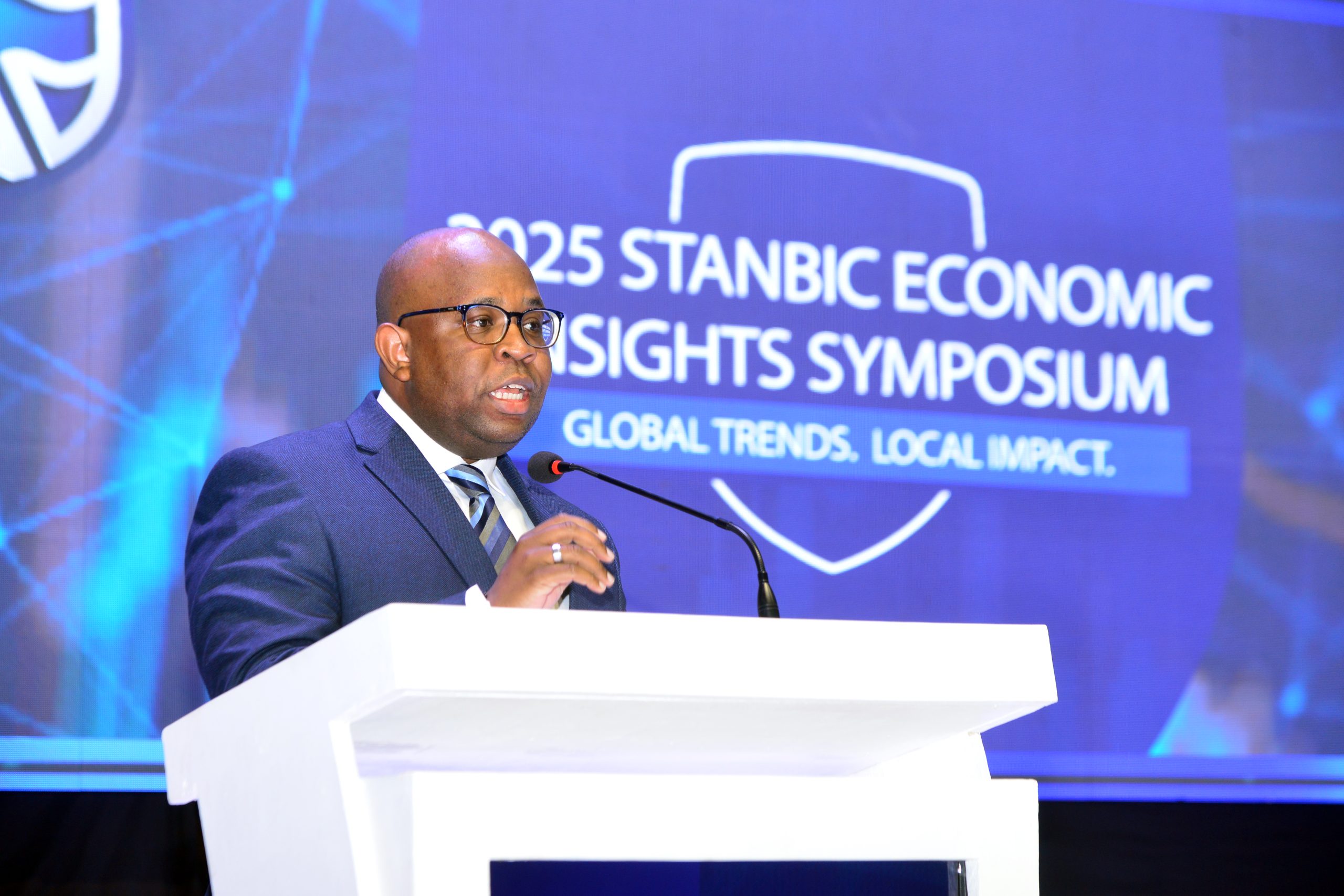
Uganda’s private sector credit remains stuck at about 12.4% of GDP, one of the lowest levels in East Africa, the executive director of the Uganda Bankers Association (UBA), Wilbrod Owor, said.
Currently, Owor said only a fraction of the businesses needed to support the country’s ambitious growth plans borrow from banks. He made the remarks during the opening of the group’s 2nd Annual Research Conference.
He said that just 70,010 registered entities access formal bank credit. The sector needs around 437,000 to handle the volumes required for Uganda’s tenfold economic expansion target, according to figures he presented.
Owor said the banking industry has committed to scaling private sector credit from about UGX 26 trillion today to UGX 490 trillion by 2040. That target aligns with the government’s plan to grow the economy from roughly $50 billion to $500 billion over the same period.
“We need research that tests our industry assumptions, stress tests our reform proposals, and equips us with the hard data required to design, scale, and diversify the financial solutions we bring to policymakers,” he said.
“Many Medium Enterprises, the segment best equipped to absorb productive credit at scale, remain a narrow slice of the market. Our challenge is not merely to expand credit, but to expand the universe of bankable entities itself,” Owor said.
The conference, held at the Protea Hotel in Kampala, was organised by the UBA in partnership with the Uganda Institute of Banking and Financial Services (UIBFS) and Makerere University’s College of Business and Management Sciences.
It focused on “Navigating Credit Risk in the Digital Transformation Era,” with sessions covering artificial intelligence in credit scoring, alternative data systems, fraud and hidden non-performing loans, ESG factors in risk models, and climate risk.
Uganda’s credit-to-GDP ratio has hovered in the low teens for years, well below levels seen in several peer economies in the region. The government has framed higher private sector lending as essential to its Agro-industrialisation, Tourism, Minerals and Science, Technology and Innovation (ATMS) growth strategy.