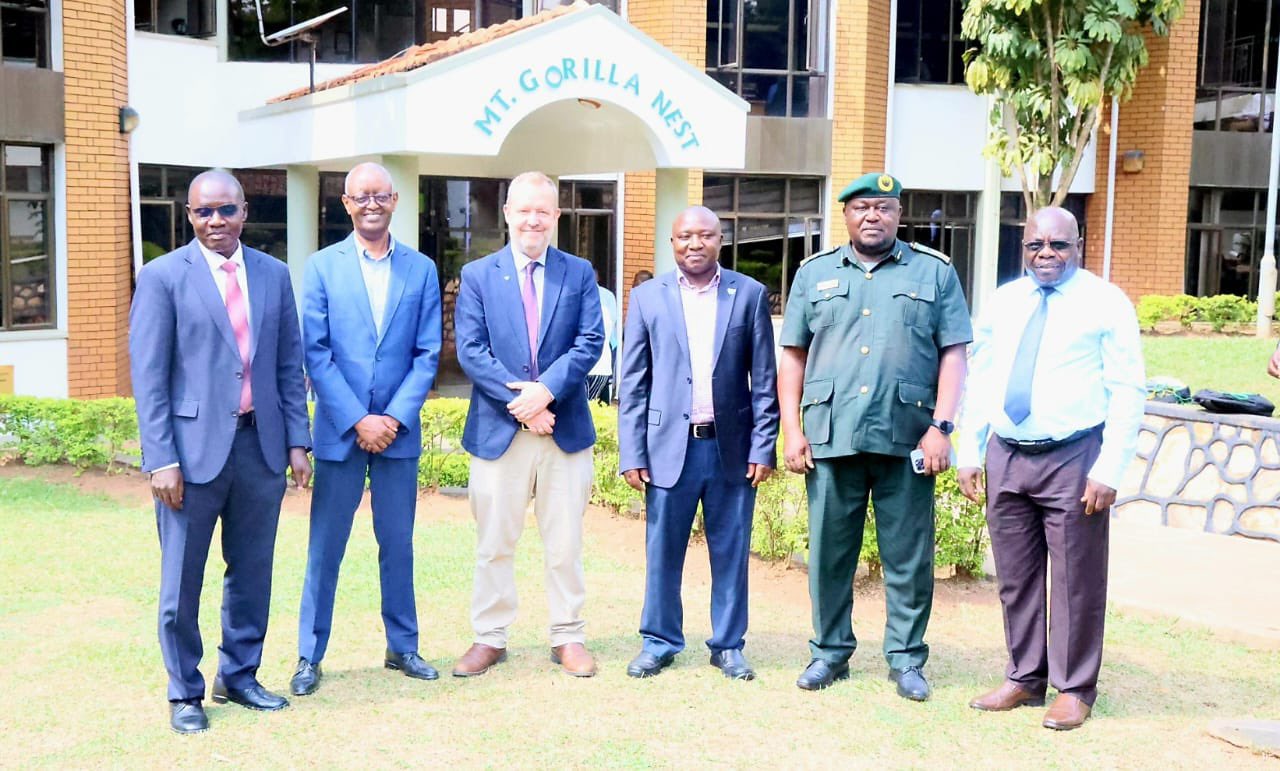
UWA and the Wildlife Conservation Society (WCS) have officially launched the Ishasha Collaborative Management Partnership, aimed at strengthening conservation, restoring the lion population and improving the management of the Ishasha sector in Queen Elizabeth Protected Area.
The partnership brings together UWA and WCS in a long-term collaborative approach that will focus on strengthening protected area management, building staff capacity, enhancing wildlife protection, improving community engagement and supporting the recovery of the area’s iconic tree-climbing lions.
Speaking on behalf of the Executive Director, Commissioner Conservation and Biodiversity Management, Makombo highlighted the importance of the partnership in revitalizing the lion population and strengthening the management of the Ishasha sector.
He noted that lions play a critical role in maintaining the balance of the ecosystem and emphasized that the partnership will go beyond lion conservation to address the wider Ishasha transboundary ecosystem.
He further underscored the importance of strengthening security in Ishasha, promoting peaceful coexistence between communities and wildlife, diversifying tourism opportunities and building the capacity of UWA staff.
In addition, he also officially inaugurated the Ishasha Collaborative Management Programme Committee, comprising three members from UWA and three from WCS. The Committee will provide strategic oversight to the program and ensure that its objectives are effectively implemented.
The WCS Regional Director, Michael Masozera, reaffirmed WCS’s commitment to supporting conservation in Uganda, noting that the organization has provided technical support to the Government of Uganda for more than half a century, including 15 years of support in the Queen Elizabeth Protected Area.
The Ishasha sector is particularly renowned for its tree-climbing lions, which are an important tourism attraction and a keystone species in maintaining the ecological balance of the ecosystem. However, the lion population has declined sharply due to human-wildlife conflict and poaching, with only three known adult lions remaining in Ishasha. The closely related population is considered non-viable and requires urgent intervention.
Through the partnership, UWA and WCS seek to restore the ecological integrity of Ishasha, secure its iconic tree-climbing lions and strengthen the relationship between the protected area and surrounding communities, while enhancing the area’s long-term tourism and conservation value