East Africa’s ambitious drive toward rapid industrialisation is crashing on a fragmented, legacy financial system that fails to move capital as fluidly as goods across regional borders.
Despite the registered regulatory milestones under the EAC Common Market Protocol, economic experts and private sector leaders warn that the region’s credit and payment architecture remain locked in national silos.
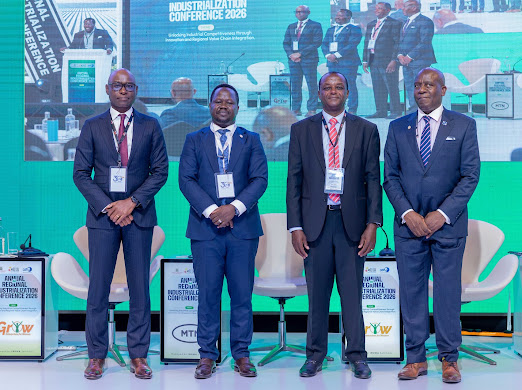
This structural mismatch inflates manufacturing costs, traps critical working capital, and handicaps local exporters against global competitors. At the Annual Regional Industrialisation Conference organized by the Private Sector Foundation, banking executives and trade policy experts made a compelling case for an urgent overhaul of the regional financial system.
According to financial analysts, traditional commercial lending models in East Africa are heavily reliant on short-term debt, double-digit interest rates, and physical real estate collateral, which are fundamentally misaligned with the long gestation periods required for industrial manufacturing.
Charles Mudiwa, Chief Executive Officer and Managing Director of dfcu Bank, emphasised that building a globally competitive industrial base requires expanding the very definition of capital beyond conventional bank credit. Mudiwa explained that capital is far more than cash, encompassing market intelligence knowing where, how, and when to sell as well as human capability, technical skills, and competencies needed to deliver value.
He stressed that simply injecting debt into an enterprise does not guarantee commercial viability, arguing that emerging micro, small, and medium enterprises require a structured framework combining technical production capabilities, financial literacy, and patient, catalytic capital.
“Building a globally competitive industrial base requires us to expand the very definition of capital beyond conventional bank credit. Simply injecting debt into an enterprise does not guarantee commercial viability; emerging micro, small, and medium enterprises require a structured framework combining technical production capabilities, financial literacy, and patient, catalytic capital,” he said.
Mudiwa noted the need to abandon the practice of underwriting standalone factories in isolation. Modern manufacturing in East Africa operates across multi-country value chains, meaning financial institutions must shift from funding single assets to financing entire industrial ecosystems.
Claver Serumaga, Executive Director of Commercial Banking at Equity Bank Uganda, said a single manufacturing operation in Uganda often depends on agricultural raw materials from Tanzania, imported machinery routed through Kenya, and consumer markets in the Democratic Republic of Congo, adding that financing the factory building alone leaves the surrounding supply chain vulnerable to severe cash-flow bottlenecks.
Serumaga challenged lenders to move away from isolated single-entity balance sheets and embrace dynamic value-chain financing. He urged commercial banks, development finance institutions, and regional governments to co-finance large-scale projects rather than operating in competition, pointing to syndicated bank participation in major regional energy infrastructure as proof that financial institutions can successfully mobilize capital at scale.
Beyond long-term credit structuring, daily operational friction within payment networks remains a costly tax on regional trade. Experts highlighted the stark discrepancy between retail digital platforms and commercial banking rails. While mobile money networks allow peer-to-peer transfers across East African borders at 2:00 a.m., formal bank clearing mechanisms remain restricted by traditional operating hours and rigid daily cut-offs.
Serumaga questioned why bank transfers should halt at 4:00 p.m. when consumer platforms operate around the clock, calling for the full integration and 24/7 expansion of the East African Payment System.
“Delayed cross-border settlements directly hold up raw material procurement, disrupt production schedules, and tie up vital working capital that could otherwise drive manufacturing output,” he noted.
Similarly, regional digital identity integration remains an urgent prerequisite for seamless cross-border commerce. Opening a corporate or personal bank account in an East African Community partner state currently involves cumbersome manual verification, residency documentation, and administrative delays that hamper investment.
Because partner states already maintain national identification databases and company registration bureaus, experts advocate for interlinking these registries digitally across borders. Digitally connecting these platforms would allow commercial banks to instantly verify corporate directors and individuals in real time, maintaining strict Know Your Customer compliance while eliminating administrative friction for cross-border enterprises.
Stephen Asiimwe, Chief Executive Officer of the Private Sector Foundation Uganda, stressed that financial reforms must go hand in hand with aggressive trade facilitation to dismantle non-tariff barriers. He identified lost time as one of East Africa’s most expensive hidden economic taxes, noting that when cargo trucks idle for days at border crossing points, working capital remains trapped inside physical inventory instead of generating economic velocity.
Asiimwe said eliminating border queues and saving time is essential for regional competitiveness.
“Our regional industrial trajectory cannot rely solely on increasing the volume of credit. Realizing the region’s manufacturing potential requires a re-engineered financial ecosystem where patient capital, digital identities, and real-time payment rails move across borders as freely as manufactured goods,” he said.