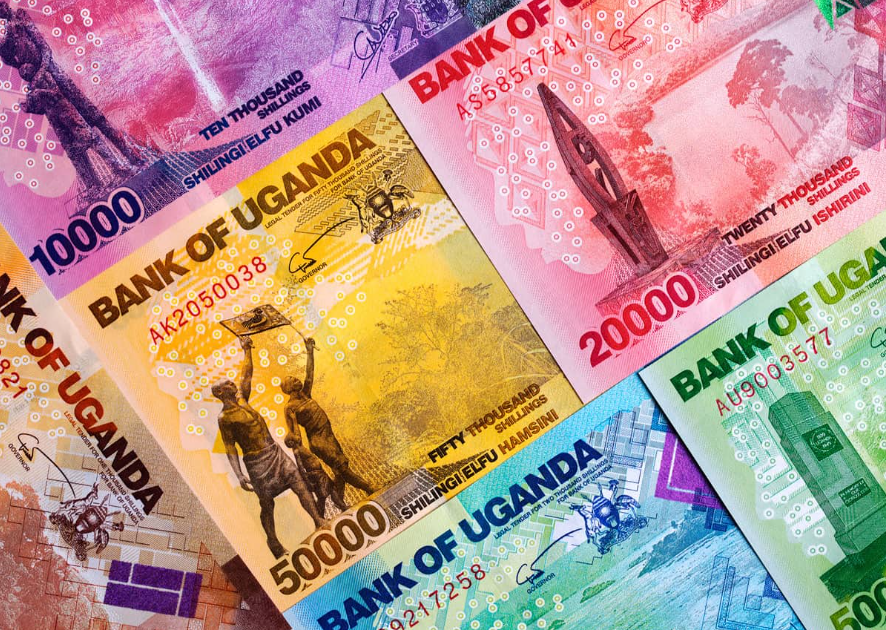
The Uganda shilling posted strong gains during the week, appreciating by approximately 5% week-on-week, supported by robust commodity-related and offshore inflows amid subdued corporate demand, according to Absa Bank Uganda weekly shilling report.
According to the report,after opening the week at 4243 / 4353, the local unit strengthened steadily to close Thursday’s session at 4040 / 4050 against the dollar. Despite the significant appreciation recorded during the first four trading days, the shilling came under mild pressure on Friday morning, largely driven by renewed offshore demand for dollars. Looking ahead, corporate dollar demand is expected to ease as the market approaches the festive season, which should continue to provide support for the local currency.
Money market liquidity conditions tightened further during the week, with overnight funding rates averaging between 12.50% and 12.75%, reflecting the continued transmission of the recent increases in the Cash Reserve Requirement (CRR) and Central Bank Rate (CBR) across the banking sector. Investor appetite remained strong at this week’s Treasury bill auction, where total bids amounted to UGX 439.0 billion against an offer size of UGX 350.0 billion were accepted, translating into a subscription rate of 125.4%. The Bank of Uganda accepted UGX 383.8 billion in cash proceeds. Cut-off yields were recorded at 11.682%, 13.425%, and 14.752% for the 91-day, 182-day, and 364-day tenors respectively.
The Kenya shilling weakened during the week, with the USD/KES pair remaining under upward pressure amid sustained demand from various sectors of the economy. The pair was quoted at 130.00 / 130.05 on Friday morning. Market participants continue to monitor developments closely; with expectations that the Central Bank of Kenya could intervene should depreciation pressures intensify.
Crude oil prices rebounded above USD 91 per barrel on Friday but remained on course for a weekly decline of approximately 12%. Sentiment was driven by optimism surrounding a potentially quicker resolution to tensions in the Middle East following the Democratic sweep in the US midterm elections. However, geopolitical uncertainties remain elevated. Adding to the bearish outlook for oil, the Middle East physical crude market shifted into surplus for the first time since July as exports from major Gulf producers increased significantly. Combined shipments from Saudi Arabia, the UAE, Iraq, and Kuwait rose by 10% to 15.53 million barrels per day in October, approaching levels last seen at the beginning of the year.
Gold prices eased below USD 4050 per ounce on Friday but remained on track for a weekly gain exceeding 4%. The precious metal benefited from expectations that a Democratic-controlled Congress could support efforts toward resolving the Iran conflict, potentially reducing inflationary pressures, and lowering the need for more aggressive monetary tightening.
The US Dollar Index advanced to around 101.8 on Friday as investors positioned ahead of the October nonfarm payrolls report, which could provide further insight into labor market conditions and the future path of Federal Reserve policy. Recent data showed that private-sector employers added 86,000 jobs in October according to ADP, while initial jobless claims fell to their lowest level in 57 years. Despite the resilient labor market data, expectations for a December Federal Reserve rate hike moderated to approximately 68% from nearly 83% previously.
Sterling strengthened to USD 1.347, its highest level since mid-September, after the Bank of England raised its benchmark interest rate by 25 basis points to 4%, marking its first-rate increase in over three years. Governor Andrew Bailey indicated that additional tightening may be required should inflationary pressures persist. Markets are now pricing in three further rate hikes by November 2027. The BoE projects inflation to peak at 4.9% in the second quarter of 2027, while its adverse scenario suggests inflation could rise as high as 6.2% in Q3 2027.
Meanwhile, the euro extended its rally to USD 1.125, reaching its strongest level since early October, supported by accelerating Eurozone inflation and a weaker US dollar following the US election outcome.