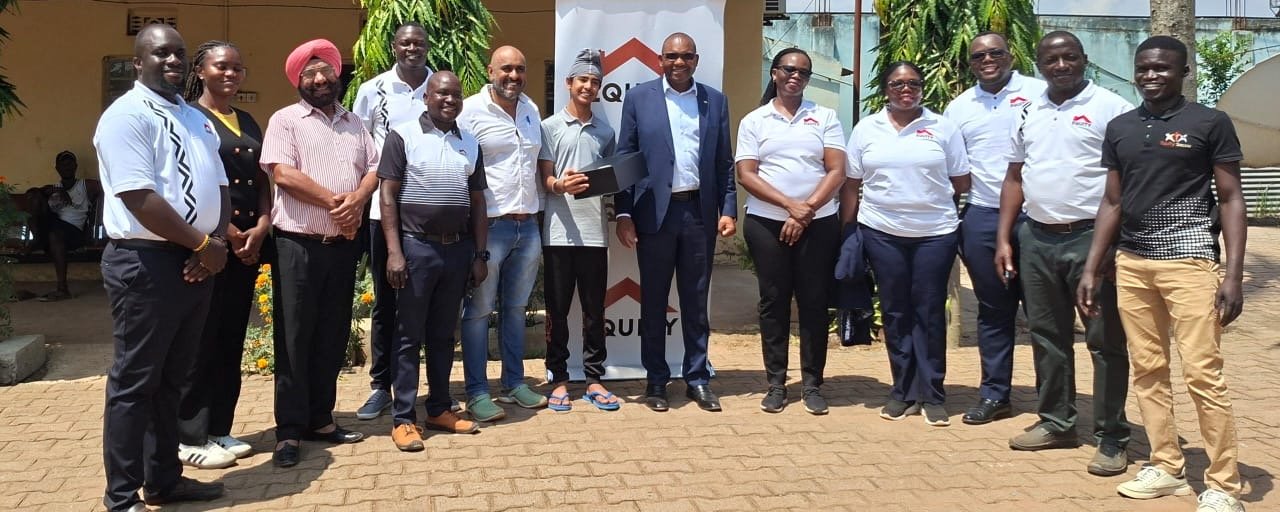
Equity Bank Uganda and Guru Nanak Oil Mills (U) Limited are stepping up efforts to reduce the use of cash in Uganda’s grain trade, beginning with aggregators who handle large payments between farmers, traders and processors.
The move is intended to address the security risks that come with moving large amounts of physical cash from processing plants to rural trading centres and farming communities.
Under the partnership, Guru Nanak suppliers will increasingly be paid electronically, while Equity Bank will place financial officers at the company’s mills and key trading points to help farmers and aggregators open bank accounts, use digital payment services and improve their financial management.
The partnership between the two companies dates back to 2013, when Equity Bank began providing financial support to Guru Nanak and businesses in its supply chain.
Guru Nanak Managing Director Surjit Singh said moving away from cash would make it safer for farmers and traders to receive and manage their money.
“Transitioning away from physical cash is an essential step for our suppliers,” Singh said. “By moving to instant digital transfers, financial literacy training and convenient mobile cash-out options, our farmers are safer and better equipped to manage their earnings and reinvest in their farms.”
Cash remains a major part of Uganda’s agricultural trade, particularly in rural areas. Grain aggregators supplying processors can receive large sums after delivering produce and then travel long distances back to their communities with cash, exposing them to theft and other risks.
Equity Bank Uganda Managing Director Gift Shoko said the programme would first target aggregators before being rolled out further down the supply chain.
“Our approach is two-layered: first, we connect with aggregators delivering produce to the mill, and once that pipeline is digitized, we reach individual farmers to ensure the entire value chain operates securely and efficiently,” Shoko said.
The bank’s Director for Public Sector and Social Investments, Catherine Psomgen, said its officers would work from processing centres and weighbridges, where farmers and traders deliver, weigh and receive payment for their produce.
The first phase will create a digital record of produce deliveries and allow Guru Nanak to pay suppliers directly into their accounts instead of relying on physical cash.
The programme is expected to later reach smallholder farmer groups and commercial growers in major production areas, including Nwoya District.
Beyond reducing the risks associated with carrying cash, the shift to digital payments could give farmers and traders better records of their earnings. Such records can help them monitor cash flow and build a financial history that may become useful when applying for loans.
For Guru Nanak, digital payments could also make it easier to track suppliers, deliveries and payments across its supply chain.
The partnership comes as Uganda continues to push for greater financial inclusion, particularly among smallholder farmers and rural businesses that remain heavily dependent on cash.
Taking banking services closer to mills, weighbridges and trading centres could make it easier for farmers to enter the formal financial system at the point where they receive payment for their produce.
The bigger challenge will be changing long-established habits. For farmers and aggregators who have relied on cash for years, the success of the programme will ultimately depend on whether digital payments can prove to be as convenient, accessible and trusted as cash.