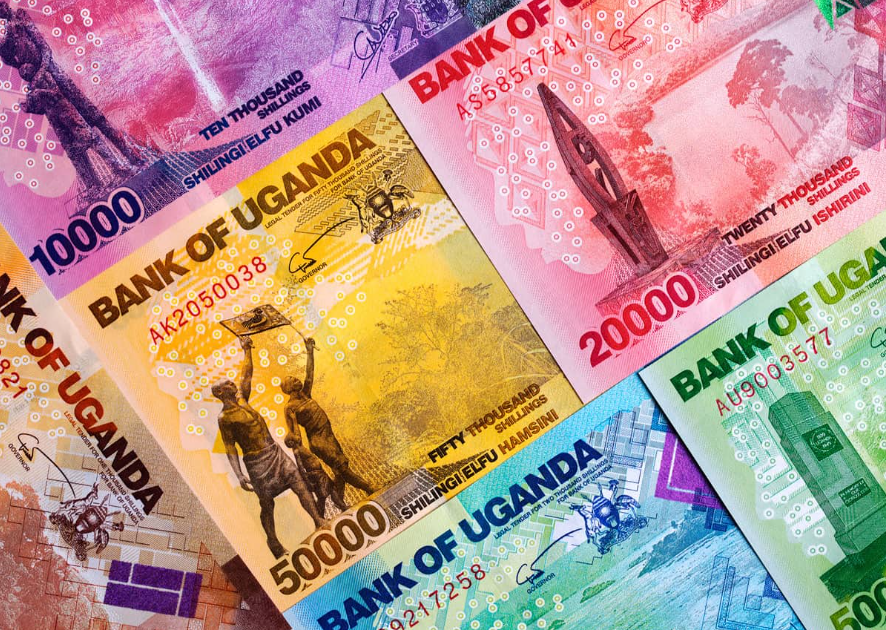
The Uganda shilling experienced an exceptionally volatile week against the US dollar, initially extending its steep depreciation before recovering following decisive intervention by the Bank of Uganda, according to this week’s report by Absa Bank Uganda.
The local unit weakened from Monday’s opening levels of UGX 4,090/4,100 to close at UGX 4,150/4,160, as sustained demand from importers and energy-sector corporates encountered limited dollar supply.
Selling pressure intensified on Tuesday, pushing the shilling to a fresh record low of UGX 4,240/4,250, before the announcement of an emergency Monetary Policy Committee meeting triggered profit-taking and dollar sales, allowing it to recover to UGX 4,120/4,130. On Wednesday, the central bank raised the Central Bank Rate by 225 basis points to 12.00%, its highest level since 2017, and sold dollars into the market, prompting a sharp 3.8% appreciation to UGX 3,960/3,970.
The recovery was only partially sustained, however, as renewed corporate, interbank, and offshore demand overwhelmed the available supply on Thursday, pushing the currency back to UGX 4,045/4,055 despite the previous day’s intervention. Overall, the shilling closed approximately 1.1% stronger than Monday’s opening level, based on quoted mid-rates, but remained significantly weaker on a broader year-to-date basis after touching unprecedented lows during the week.
The shilling is expected to remain volatile as the market assesses the effectiveness of the tighter monetary-policy stance and the durability of the central bank’s foreign-exchange intervention. The rate increase was intended to contain exchange-rate-driven inflation after annual headline inflation rose to 4.6% in September, while the Bank of Uganda warned that continued currency weakness, higher international oil prices and Middle East-related disruptions could push headline inflation to between 7.0% and 7.5% over the next 12 months.
Although the higher policy rate and tighter shilling liquidity should moderate speculative and corporate dollar demand, persistent importer requirements, offshore portfolio exits and limited foreign-currency supply could continue to exert pressure. Commodity-export receipts, remittances, and further central bank action may provide intermittent support, but the currency is expected to trade within a broad UGX 3,950–4,150 range in the near term, with risks remaining tilted toward renewed depreciation should hard-currency demand intensify.
Money market liquidity remained relatively tight throughout the week as the banking system continued to adjust to the higher 13.50% Cash Reserve Requirement and the subsequent increase in the Central Bank Rate from 9.75% to 12.00%. Overnight and short-term funding rates opened the week at 10.75%–11.00%, before easing temporarily to 9.80%–10.00% on Tuesday as shilling availability improved.
However, funding conditions tightened following Wednesday’s policy-rate increase, pushing overnight rates to 11.00% and subsequently to 11.63% on Thursday. The Bank of Uganda also remained active in liquidity management, absorbing UGX 45 billion through a two-day repo on Tuesday.
Overall, the combination of the higher reserve requirement, active liquidity absorption and tighter monetary policy sustained upward pressure on interbank funding costs. Activity in the fixed-income secondary market strengthened during the week, supported by renewed buying interest from both local and offshore investors following the previous week’s Treasury bond auction.
Trading interest was initially evident across the yield curve before becoming concentrated around the belly and longer end, particularly in the 2037, 2046 and 2050 maturities. Looking ahead, liquidity conditions are expected to remain constrained as market participants adjust to the tighter monetary-policy environment, keeping short-term interbank rates elevated. Attention will now turn to the upcoming Treasury bill auction, where the higher CBR and persistent liquidity pressures could support a firmer yield bias across the offered tenors.
The Kenyan shilling weakened modestly against the US dollar during the week as broad-based corporate, interbank, and dividend-related demand gradually outweighed available foreign-currency inflows. USDKES opened the week around 129.65/80, supported by healthy tea-sector inflows ahead of October bonus payments, stronger remittance receipts, and relatively subdued demand. The pair edged slightly lower to 129.65/75 on Tuesday, although corporate demand began to re-emerge, before rising to 129.70/80 on Wednesday as corporate and interbank buying gained momentum. Pressure intensified toward the end of the week, with USDKES closing at 129.75/85 on Thursday and 129.85/95 on Friday, as persistent demand and slower inflows weighed on the local currency.
Overall, the shilling ended the week about 0.2% weaker, based on the movement in quoted mid-rates. Reuters similarly reported increased dollar demand from oil marketers and general importers, while noting that inflows from charities continued to limit the extent of the depreciation. Looking ahead, USDKES is expected to remain supported near the upper end of its recent trading range as demand from oil importers, dividend-paying corporates and other large foreign-currency users persists.
The 129.95–130.00 area remains an important resistance level, with potential intervention by the Central Bank of Kenya likely to discourage a disorderly move above that threshold. Official data showed that the shilling weakened from KSh129.71 to KSh129.94 per dollar during the week ending 8 October, while foreign-exchange reserves declined to USD14.736 billion, equivalent to 5.9 months of import cover, but remained above the statutory four-month minimum. Tea proceeds, diaspora remittances, charity inflows, and adequate reserves should continue to provide some support, although elevated global oil prices and sustained importer demand may keep USDKES within a 129.60–130.10 range in the near term, with risks modestly tilted toward further shilling weakness.
WTI and Brent crude recorded solid gains this week, though WTI significantly outperformed Brent. WTI rose 6.6% to $97.90 per barrel, its strongest weekly advance in several months, while Brent gained 1.5% to $106.31 per barrel. The rally was driven mainly by heightened geopolitical risk after Houthi missile and drone attacks damaged Saudi Aramco’s headquarters, alongside continued shipping disruptions around the Strait of Hormuz. WTI received additional support from a sharp decline in US crude inventories, helping narrow its discount to Brent to approximately $8.40 per barrel.
Brent’s relatively modest gain reflected countervailing pressure from recovering Middle Eastern production, with Saudi output rebounding to 8.37 million barrels per day and UAE production reaching 5.3 million barrels per day. The demand outlook also softened after OPEC and the IEA reduced elements of their near-term consumption forecasts.
Nevertheless, elevated freight costs, disrupted Gulf shipping and diminished prospects for an immediate US-Iran ceasefire maintained a substantial geopolitical premium across the market. Overall, supply recovery and weaker demand expectations are limiting Brent’s upside, while geopolitical risks and tight US inventories remain supportive of crude prices, with futures markets increasingly pricing an extended risk premium into 2027.
Gold declined 1.66% over the week to approximately $4,173 per ounce, underperforming both the S&P 500 and the broader commodity market. The decisive catalyst was Tuesday’s hotter-than-expected US CPI report, which pushed two-year Treasury yields higher and renewed expectations of further Federal Reserve tightening. Gold fell 1.33% during that session, while subsequent hawkish commentary from several Fed officials reinforced the pressure from rising real yields and a stronger dollar.
The metal is now trading roughly 25% below its January 2026 peak, highlighting the sustained impact of the higher-for-longer interest-rate environment. Gold recovered briefly on Thursday but struggled to maintain the advance, with additional pressure coming from Kazakhstan’s shift from gold buyer to seller and restrictions on new subscriptions to some Indian gold ETFs.
Prices stabilized on Friday after Fed Chair Warsh avoided fresh hawkish signals, prompting a modest decline in the dollar and some reduction in expectations of an October rate increase. Nevertheless, the metal’s limited safe-haven response to geopolitical and energy-market tensions indicates that interest-rate expectations and the dollar remain the dominant drivers. The upcoming Fed meetings, particularly the growing focus on a possible December hike, will therefore be the key near-term catalyst for gold.
Both the Euro and Sterling strengthened against the US dollar this week, with EUR/USD rising 0.45% to 1.1252 and GBP/USD gaining 0.83% to 1.3336. The recovery was driven mainly by broad dollar weakness after Fed Chair Warsh offered no new guidance on the interest-rate outlook, prompting investors to reduce long-dollar positions and allowing both currencies to recover from recent lows. The euro rebounded from a 17-month low, supported by hawkish comments from several ECB officials who indicated that another rate increase may be necessary amid elevated energy costs and persistent inflation.
However, the recovery remained primarily dollar-driven, with EUR/USD still down 1.83% over the past month and vulnerable to renewed dollar strength. Sterling outperformed, supported by stronger-than-expected UK GDP growth of 0.1% in August and a technical break above its 21-day moving average.
Nonetheless, disagreement within the Bank of England over the need for further tightening limited conviction in the pound’s advance. Looking ahead, both pairs remain sensitive to US yields and Fed policy expectations, while the euro will depend on the ECB’s response to energy-driven inflation and sterling’s relative strength will require continued UK economic resilience and a credible BoE tightening bias.