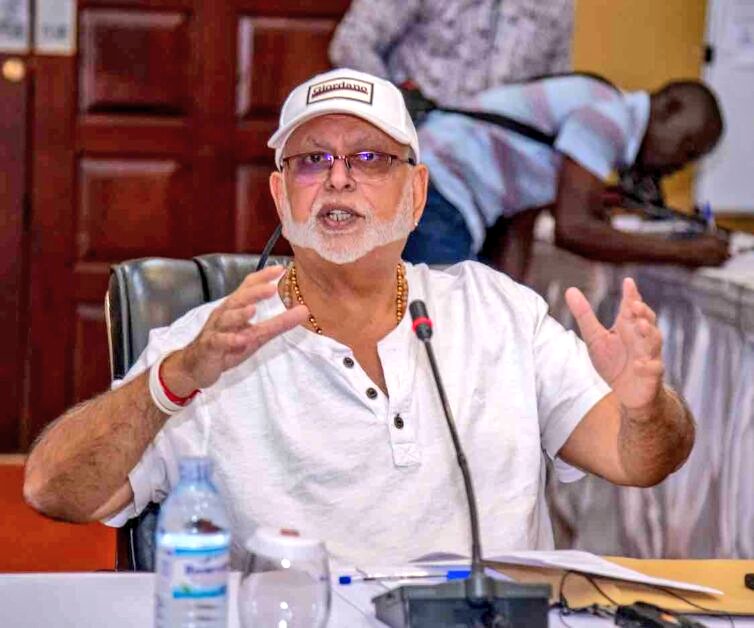
A trial over the 2017 transfer of Crane Bank’s business to dfcu Bank opened on Monday at the High Court in London, with former shareholders led by Sudhir Ruparelia seeking about £200 million in damages.
The hearing at the Royal Courts of Justice is expected to last about 16 weeks. The claimants say selected assets and liabilities of Crane Bank were moved to dfcu through an unlawful process and at a price far below the bank’s value. dfcu Bank, dfcu Limited, current and former directors, and other parties linked to the deal deny the claims.
Crane Bank was once Uganda’s largest locally owned commercial bank and the country’s fourth-largest lender. Bank of Uganda placed it under statutory management on October 20, 2016, after a run on deposits and amid concerns over its capital and liquidity. In January 2017 the central bank transferred selected assets and liabilities to dfcu under a purchase of assets and assumption of liabilities agreement.
Ruparelia and the other claimants argue that the price paid did not reflect the bank’s worth and that they lost the value of their shares and related business interests. Their claim also names Norfinance, a Norwegian investment company, Rabo Partnerships (a Rabobank subsidiary), and two former Rabobank bankers who sat on the dfcu board, Albert Jonkergouw and Willem Cramer.
Court papers filed by the claimants refer to an alleged $27.5 million payment tied to the sale of a portfolio of Crane Bank loans. They also say talks about a possible acquisition began before the bank was placed under statutory management.
dfcu rejects the allegations. In its filings the bank says the transaction was lawful, negotiated in good faith, and carried out only after Bank of Uganda had taken control because of capital, liquidity and governance problems. It says it bought selected assets and assumed specified liabilities rather than acquiring Crane Bank as a company. The bank adds that the deal followed a process run by the central bank, allowed customers to keep access to their deposits, and helped limit wider strain on the banking system.
On the $27.5 million figure, dfcu says the sum was meant to repay emergency support earlier provided by the central bank. It says valuation work, including by KPMG, formed part of the process, and that disclosure so far has not produced a document showing the defendants took part in corruption, dishonesty or a conspiracy. The bank expects the reasons for the central bank’s intervention itself to play a limited role in the London hearing.
In 2018 the late Bank of Uganda governor, Emmanuel Tumusiime-Mutebile, said an inventory after the takeover found Crane Bank massively insolvent, with negative capital, and that liquidity support alone could not restore it. He said the transfer was allowed under the Financial Institutions Act and protected depositors. The claimants are expected to point to earlier financial statements and other records which, they say, showed positive equity and profitability before the takeover.
Evidence listed for the trial includes central bank examination reports, a 2016 memorandum in which Crane Bank noted significant undercapitalisation, transaction records, and expert evidence on valuation, banking rules and Ugandan law.
Greenberg Traurig represents the claimants. Freshfields acts for dfcu. Other defendants are represented by firms including A&O Shearman and Milbank. Judgment will be given on a date to be fixed after the hearing ends.