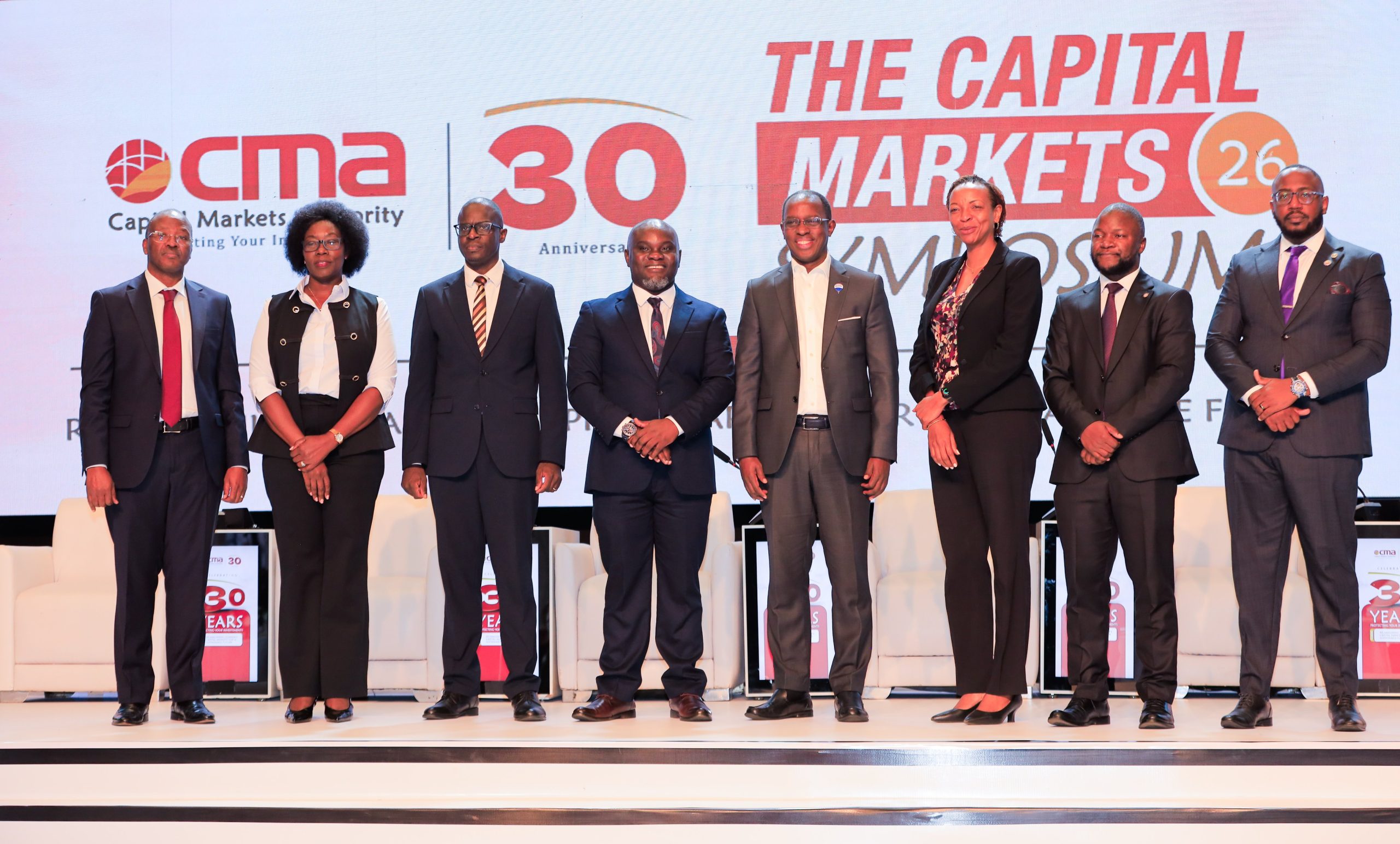
The Capital Markets Authority (CMA) on Thursday used its 30th anniversary symposium to press government, issuers and intermediaries to turn three decades of market building into long term finance for a $500 billion economy.
The symposium, at the Kampala Serena Hotel, closed the CMA@30 programme under the theme “Re-imagining Uganda’s Capital Markets for a Sustainable Future.”
The Authority was established in 1996 to develop, promote and regulate the industry. Officials marked the milestone by setting the next test: whether the market can now supply patient capital at the scale government says the Tenfold Growth Strategy requires.
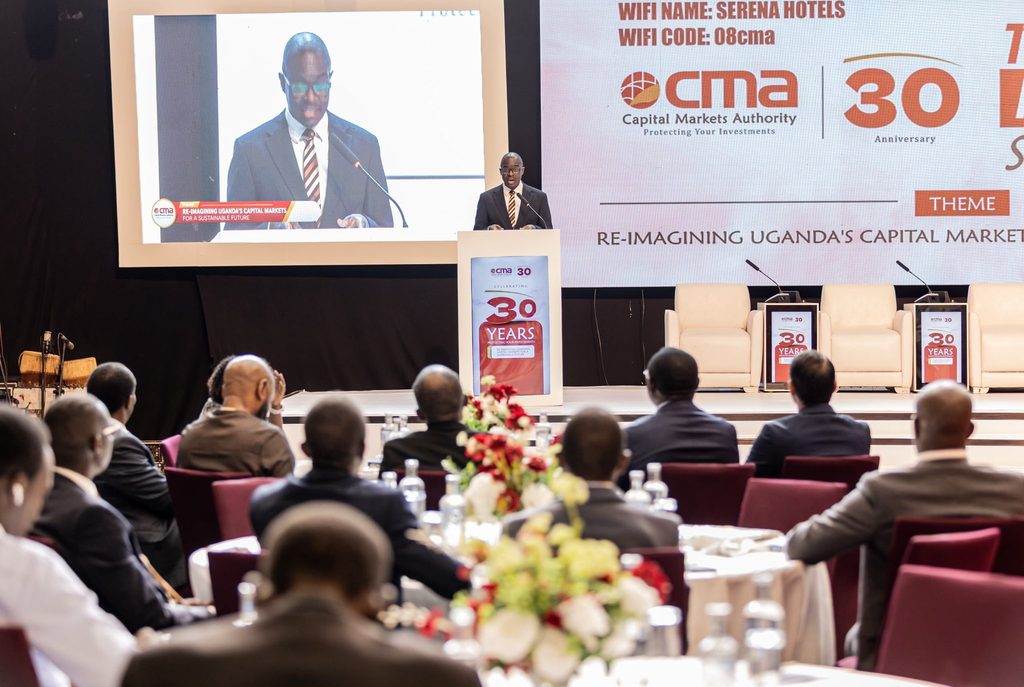
Joseph Enyimu, Commissioner for Economic Development Policy and Research, represented the Minister of Finance, Henry Musasizi.
“As we work to meet the goal of expanding our economy to $500 billion, capital markets remain a priority for Government,” he said.
He listed five measures: encouraging public enterprises to raise long term finance in the markets and ease pressure on the Consolidated Fund; using capital markets to finance infrastructure; deepening the government securities market; reviewing tax and regulatory measures to encourage long term investment; and working with pension-sector stakeholders so funds can hold a larger share of assets in long-dated Ugandan securities, within prudent limits.
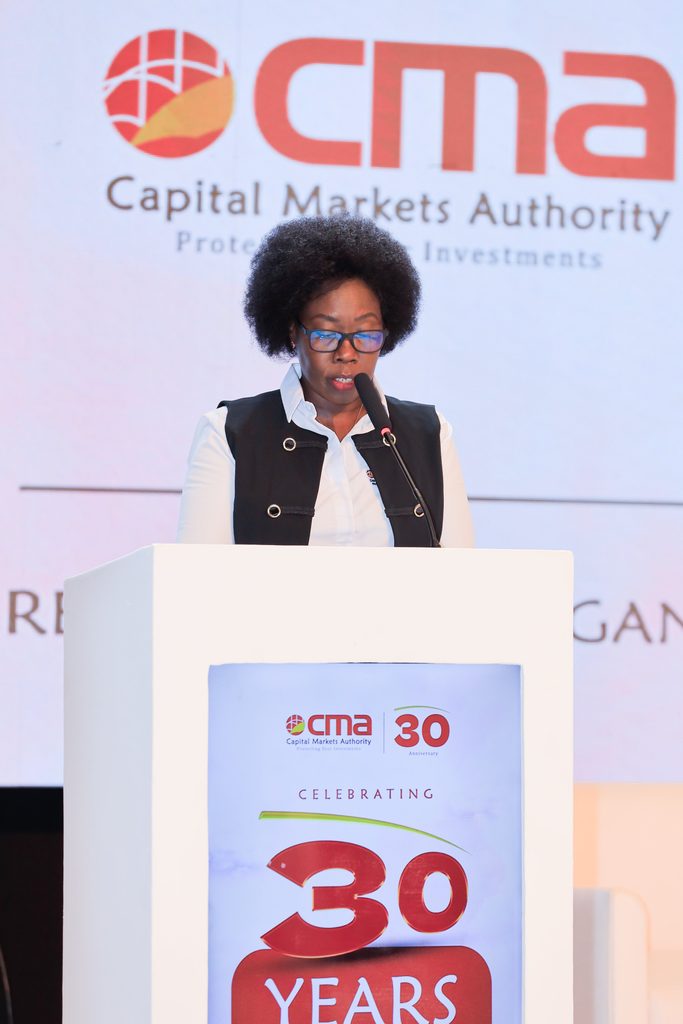
Josephine Okui Ossiya, CMA chief executive, anchored the anniversary in the institution’s origins. “Thirty years ago, a small team began building that possibility,” she said.
She credited successive boards, staff, market participants and partners, and said the journey had been one of growth, resilience, innovation and shared commitment.
“As we celebrate this milestone, we honour the past, celebrate the present and look ahead to an even stronger and more vibrant future for Uganda’s capital markets,” she said.
At the September launch of the anniversary, Ossiya reported segregated fund assets of more than Shs6 trillion, domestic market capitalisation on the Uganda Securities Exchange above Shs15 trillion, and collective investment scheme assets of Shs7.06 trillion.
Total funds mobilised through the markets stood at Shs23.4 trillion. Public understanding of capital markets was 60.8 per cent. More than 220,000 Ugandans held funded collective investment scheme accounts, and more than 235,000 maintained Securities Central Depository accounts.
CMA regulates more than 160 licensed participants. Figures released at the March launch, as of December 2025, put equity raised through public offers at Shs2.3 trillion and corporate bonds at Shs290 billion.
Speakers treated those totals as progress and as evidence of a participation gap. Denis Ruharo, team lead at D-Mark Ltd, said: “You realise 64 per cent of adults have mobile money accounts, but less than 1 per cent are using capital markets authority related products. I still believe there is potential.” The mobile money figure matches the 2023 FinScope survey.
Joseph Kitamirike, chief executive of ALTX Africa, warned against expecting technology to close the gap alone. “There is a thought that technology will solve everything. It doesn’t solve everything. I think what technology does for us is, it enables different routes to settlement. It enables a different type of access,” he said.
Paul Muganwa, head of corporate and investment banking at Stanbic Bank Uganda, said platforms were likely to become less distinctive. “So we think of a future where platforms are commoditized, clients can access options from a variety of platforms, and fund managers and banks are thinking about scale more than unique value proposition,” he said.
On listings, Paul Bwiso, chief executive of the Uganda Securities Exchange, said companies themselves had to change. “What we need to do is advocate for the companies and the leadership within these companies to drive to work towards being public companies in terms of their operations. We also need incentives for firms to go public,” he said.
Dickson Ssembuya, CMA’s director of research, asked whether the product shelf and the cost of raising money were themselves the constraint. “Do the products that we have meet the needs of those who need capital? So products could be an issue. Is it cost? Are we too costly? On average, how much does it take for you to raise capital through the capital markets?” he said.
Benoni Okwenje, general manager for financial services at Centenary Bank, said the market’s offer was duration. “What capital markets can provide is long-duration funding, and this is through instruments like bonds, equities, and many other insurance,” he said.
Arnold Bagubwagye, head of financial inclusion at the Bank of Uganda, said shared platforms could also cut integration costs for insurers.